Registered in 2025
310with KUSA, both coats
243 stock coat and 67 long coat. The long coat had just 7 registrations in 2016.[7]
The two coats
Loyal, alert and quick to learn, bred in Germany to herd and then to work beside people. It needs training, daily exercise and an owner with time to give.
Is a German Shepherd right for you?
The SV, set up in Frankfurt on the suggestions of Max von Stephanitz and A. Meyer, still holds the standard. From herding sheep to police and service work.
Where the breed comes from
KUSA registers the stock coat and the long coat as two varieties, and the long coat grew from 7 registrations in 2016 to 67 in 2025.
The two coats
What to ask for on both parents, which of two schemes graded them, and why mobility is the big question for an older Shepherd.
Health and screening
Strong sun and high altitude raise the risk of pannus, a painful eye inflammation. What to watch for, and the other South African risks.
South African conditionsThe essentials in brief. The figures come from the FCI standard, veterinary studies and KUSA's statistics, all listed at the foot of the page; any one dog may differ.
A German Shepherd gives back what you put in: time, training and a job to do. Read both lists honestly, as a household, before you look at a litter.
Before money changes hands for any puppy, of any breed, make the six checks: meet the mother, see the records, put the agreement in writing, and pay only into a business account.
Read the six checks
The standard asks for a well-balanced dog with strong nerves: self-assured, natural and, unless stimulated, good-natured, attentive and willing to please, with the resilience to work as a companion, guard, protection, service and herding dog.
Vets describe a dog that is loyal and gentle with its family, often reserved with strangers, and keen to chase. Breed explains only part of a dog's behaviour, so early socialising, training and supervision around children still matter for every one.[3][5]

The breed was developed from German herding dogs into a versatile working, herding and service dog, and it is the classic breed of IGP, the international working sport of tracking, obedience and protection.
It is intelligent and responds to consistent, positive training. Vets link boredom in the breed with behaviour problems, so a German Shepherd needs real work for its mind as well as walks.[2][3][8][5]
Training and exercise
In a UK study of German Shepherds under vet care, the median life span was 10.3 years. Musculoskeletal disease was the most common cause of death, at 16.3%, and inability to stand came next, at 14.9%.
That is why both parents' hip and elbow certificates and a DNA test for degenerative myelopathy matter, and why a lean body and sensible exercise matter for the whole of the dog's life.[4][6][9]
German Shepherd healthSix pages for South African families weighing up a German Shepherd, with sources at the foot of each.

Hips, elbows, DM, EPI, bloat and pannus, the two grading schemes, and the certificates to see on both parents.
German Shepherd health checks
Training a working mind, exercise and growing joints, grooming two coats, and the Highveld sun and other local risks.
Living with a German Shepherd
Food for a large dog, vet care and an emergency fund, grooming kit, training and dog sport.
Budget for a German Shepherd
Which body registers the litter, which scheme graded the hips, breed surveys, and the 'rare white' adverts.
Buy a puppy safely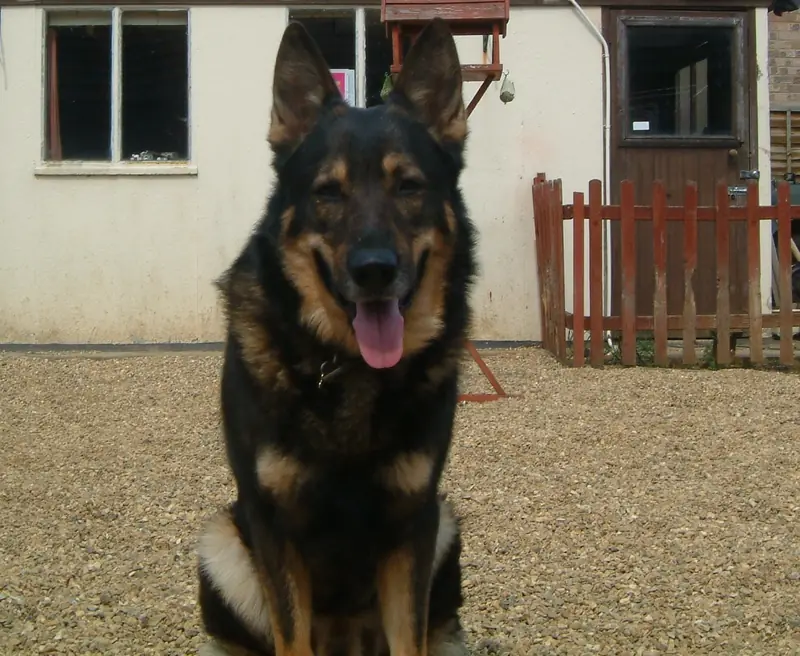
The 1899 SV, the FCI standard, two coats on two registers, South Africa's two bodies, and the colours.
Clubs and registries
Premier Pets places puppies and does not breed. Read how a placement works, then ask about a German Shepherd.
How we place puppies
243 stock coat and 67 long coat. The long coat had just 7 registrations in 2016.[7]
The two coatsMusculoskeletal disease was the most common cause of death in the same study.[4]
What affects itHad some degree of elbow dysplasia in the UK scheme. Ask for both parents' certificates.[10]
Ask for the certificatesFrom KUSA's registry statistics, a UK study of German Shepherds under vet care and the UK elbow scheme. Individual dogs vary; the sources are listed below.
The Premier Pets Directory lists South African breeders, vets, trainers, groomers and kennels. A name in the directory is a starting point, not an endorsement, so ask each one the questions in this guide.
Five ways into this guide, each opening a section.

Two grading routes exist in South Africa. Ask which one, and for the certificate itself.

UV light and altitude raise the risk of a painful inflammation of the cornea.

Why a long coat can turn up in a stock-coat litter, and how KUSA handles it.

White is not allowed in the standard, and the standard sets the size.

It is loyal and gentle with its own family and reserved with strangers, and it needs training, daily exercise and supervision with children. It is also a natural watchdog and the classic police and protection breed, but safe protection comes from training, socialising and a secure fence.[5][3][8]
A vet-written guide says it suits an owner with some experience of training a large, intelligent dog best. It needs one to two hours of exercise and training every day, and a bored German Shepherd develops behaviour problems, so plan that time before the dog comes home.[5]
It is intelligent and responds well to consistent training with food, toys and play, and it works hard for a reward it values. Start early, teach a solid recall because of its prey drive, and never use prong, choke or shock collars.[5]
Dogs stand 60 to 65 cm and weigh 30 to 40 kg; bitches stand 55 to 60 cm and weigh 22 to 32 kg.[3]
About ten years. A large UK study found a median of 10.3.[4]
Yes, heavily all year, with heavier moults in spring and autumn. Brush several times a week.[5][6]
Stockhaar is the stock coat, harsh and close-lying; Langstockhaar is the long coat, soft, with tufts and a bushy tail. KUSA registers them separately.[1][3]
White is not allowed in the breed standard, and the Royal Kennel Club lists white as a non-standard colour.[3][6]
One to two hours a day, plus training, scent work or games for the mind.[5][6]
Degenerative myelopathy is a slow spinal disease of older dogs with no cure, and a DNA test exists. Ask for results on both parents.[5][9][6]
Both register German Shepherds in South Africa. Ask which one your breeder uses, and which scheme graded the parents' hips and elbows.[11][8]
Watch the eyes: high altitude and strong UV light raise the risk of pannus. Ask your vet to check them at every visit.[5]
Plan for food for a large dog, vet care with check-ups and vaccinations, sterilisation, tick, worm and Spirocerca prevention, a grooming rake, training classes and an emergency fund for bloat surgery, EPI or joint care. The cost-to-keep page sets these out.[5][12]
Begin with the breeders listed in the Premier Pets Directory, or search it for German Shepherds, then ask each breeder which body registers its litters and which scheme graded the parents.
Directory listings are gathered from public sources, and breeders can claim, correct or remove theirs. A listing shows that a business exists; Premier Pets has checked a breeder only where its page says so.
Written from the sources above for Premier Pets. Last reviewed 27 November 2026. Spot something out of date? Email sales@premierpets.co.za.